

Parallel shaft gearboxes · STM Polska
PMP and PMF parallel shaft gearboxes
PMP and PMF are parallel shaft gearboxes for medium-heavy and heavy industrial duty. Every model in the series uses three reduction stages, three pairs of gears, which is how it reaches high ratios and holds a steady output torque. The housing is a single monolithic casting machined on CNC equipment, so dimensional accuracy is high and one unit performs like the next.
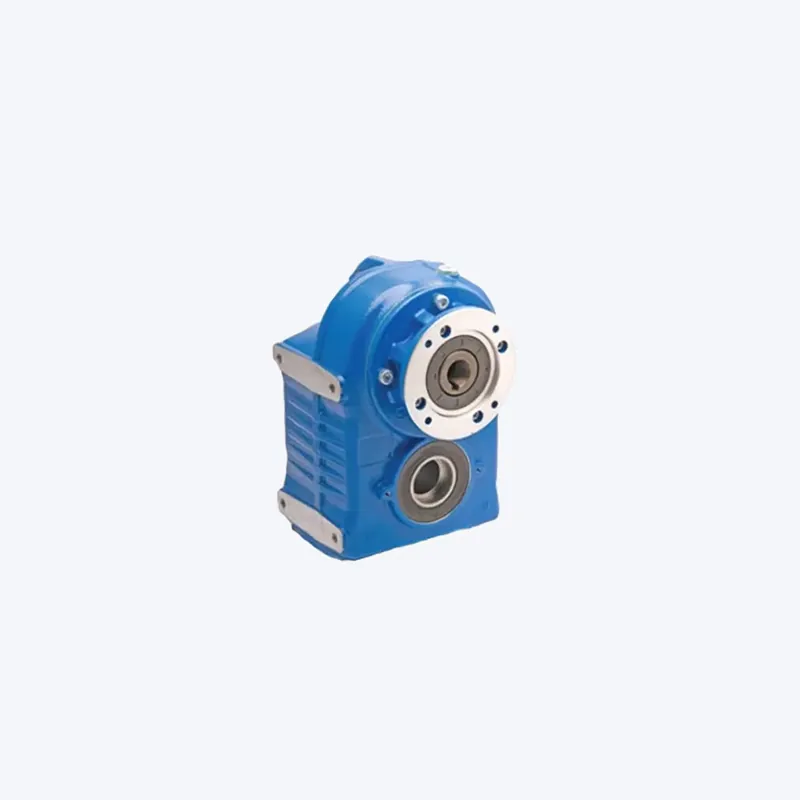
Gears are case-hardened and ground. That combination cuts friction, keeps noise down and adds years to the gear set, and it is the main reason the series gets specified where a drive runs continuously. Because the housing is cast in one piece, it resists deformation and carries high loads without the geometry moving, which is what a shaft-mounted gearbox on a loaded conveyor is up against every day.
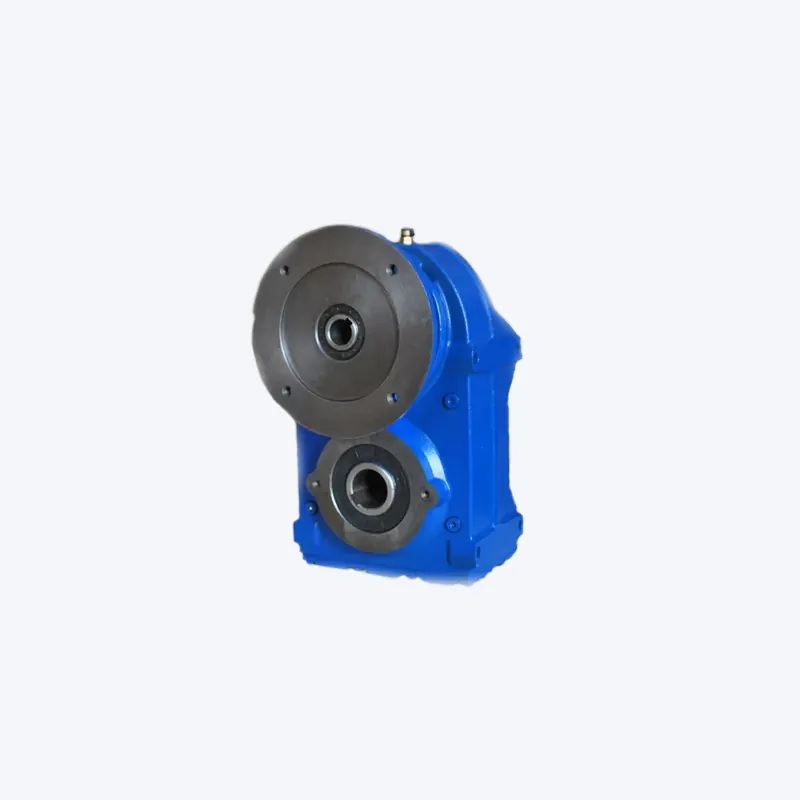
PMP is the version used on standard industrial drives. PMF gives more freedom in mounting and configuration, which helps when the drive has to fit an awkward layout. Both are sized the same way: output speed, torque and the character of the load first. Where the drive sees shock loading, apply a service factor and step up a size so there is torque in reserve.
Tell us whether the load on the output shaft is axial, radial or a mix, and how the unit is mounted, because that decides the bearing duty as much as the torque figure does. Ambient temperature, dust and humidity decide the lubricant and the sealing. Fitting accuracy matters more on this series than on most: ground gears only stay quiet if the drive is aligned properly, and poor integration shows up as noise and wear.
PMP and PMF gearboxes run on conveyors, production machines and transport lines, and in equipment that has to keep going without interruption. Send us the application data and we size the gearbox, the ratio and the output configuration, then quote within one working day.
Main features
Three reduction stages on every model
Monolithic cast housing machined on CNC equipment
Case-hardened and ground gears for quiet running
Built for medium-heavy and heavy industrial duty
PMF adds mounting and configuration flexibility
High dimensional accuracy and repeatable parameters
Specifications
- Reduction stages
- Three, on every model in the series
| Housing | Monolithic one-piece casting, machined on CNC equipment |
|---|---|
| Gearing | Case-hardened and ground gears |
| Reduction | Three gear pairs for high ratios and stable output torque |
| Duty class | Medium-heavy and heavy industrial applications |
| Variants | PMP for standard drives, PMF for greater mounting flexibility |
Applications
- Conveyors
- Production machines
- Transport lines
- Equipment running continuously
- Industrial automation drives
Documentation
Catalogue, ratio tables and dimensional drawings for the PMP / PMF series are sent with every quotation. Request the documentation.
Questions about the PMP / PMF series
What is the difference between PMP and PMF?
PMP is the series used on standard industrial drives, where the layout is conventional and the gearbox simply has to do the reduction. PMF offers more mounting and configuration flexibility, so it fits more complicated drive arrangements and tighter or more awkward installations. Mechanically the two share the same three-stage reduction and the same monolithic housing.
Why three reduction stages?
Three pairs of gears give a much higher ratio than one or two stages can in the same frame, and they hold the output torque steady while doing it. That is what makes the series a compact answer for slow, heavily loaded drives. It also means output speeds well below what a single-stage helical unit can reach.
Are they suitable for continuous duty?
Yes. The design is intended for continuous running in industrial environments, holding stable parameters over a long life. The case-hardened, ground gears and the one-piece housing are what make that possible. Size the unit with a margin for the real load pattern and keep the lubrication and sealing right for the environment, and it will run without drama.
Does fitting accuracy really matter?
On this series, yes. The gears are ground, so they run quietly when the alignment is right. Sloppy integration puts the mesh out, and the first symptoms are more noise and faster wear. Check the alignment of the shafts and the coupling, and follow the mounting arrangement the drive was sized for.
What do you need to size a PMP or PMF gearbox?
Output speed, torque and the character of the load, then the mounting method and the direction of the load on the output shaft, axial, radial or mixed. Add the ambient conditions: temperature, dust and humidity change the lubrication and the seals. With shock loading we also apply a service factor before we pick the frame size.
Related series
Parallel shaft gearboxes
WPF parallel shaft gearboxes
WPF parallel shaft gearboxes for tight installations: low profile, several working positions and long inspection intervals. Sized and quoted in one day.
Discover
Request a quotation
Quote for pmp and pmf parallel shaft gearboxes
Reply within one working day with a price, a lead time and the datasheet.
What lets us quote first time
- Driven shaft diameter
- Ratio
- Output torque
- Torque arm position