
Gearboxes
Feed auger gearboxes
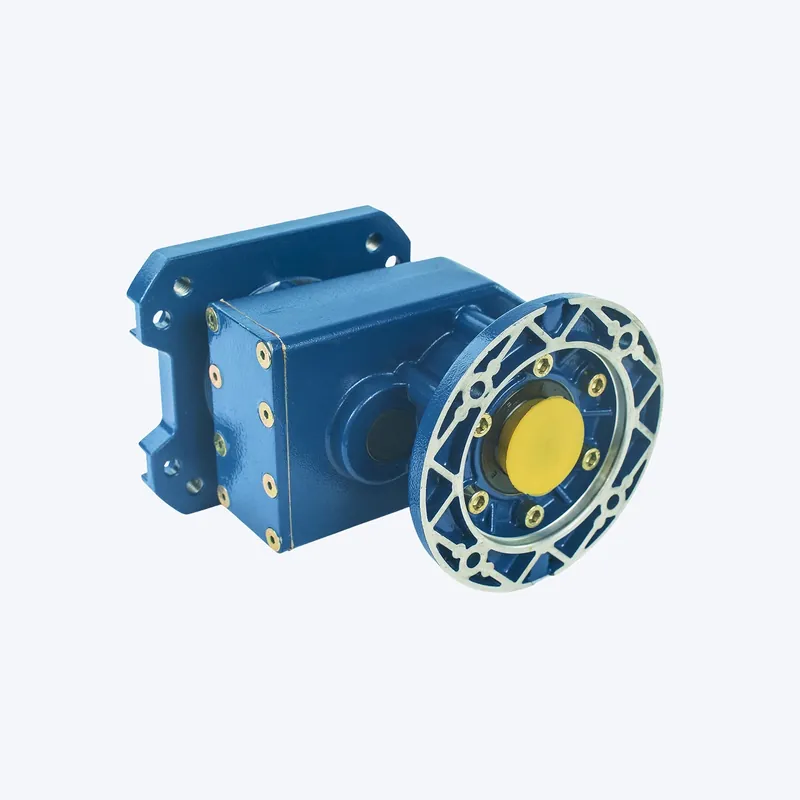
A feed auger gearbox is the geared motor that drives the spiral feeder in an animal feed distribution system. It brings the motor speed down to the speed the auger needs and produces the torque to keep the spiral turning when the line is full, when the quantity of feed surges and when the auger has to start under load. It is a standard fitting on pig, poultry and cattle feeding systems.
The unit works with three-phase motors of 0.75 kW, 1.1 kW and 1.5 kW, and output speeds are 550, 450 and 275 rpm. Longer lines and heavier mixes take the higher motor power and the lower speed of 275 rpm; shorter runs usually take 450 or 550 rpm to get the throughput up. The mechanism is designed for both continuous and cyclic running, which is what an automatic feeding schedule demands.
Housings are aluminium or cast iron depending on the model, with a bronze worm wheel and a hardened steel worm for wear resistance, and most units arrive filled with lubricant and ready to mount. Livestock buildings are dusty and damp and the temperature moves about, so the gearbox has to be durable and properly sealed. Tell us the auger length, the feed, the duty and the starting load, and we pick the motor power, the output speed and the ratio, then quote within one working day.
Main features
Three-phase motors of 0.75, 1.1 and 1.5 kW
Output speeds of 550, 450 and 275 rpm
Bronze worm wheel with hardened steel worm
Aluminium or cast iron housing by model
Supplied lubricated and ready to mount
Built for dusty, damp livestock buildings
Questions we get asked
Which output speed do I need, 550, 450 or 275 rpm?
It follows the length of the auger and what you are moving. Long lines and heavy feed mixes run better at 275 rpm, where the torque is highest and the spiral is less likely to stall. Shorter installations usually take 450 or 550 rpm to increase the rate of feeding. Give us the line length and the ration and we will pick.
What motor power should I choose?
Three-phase motors of 0.75, 1.1 and 1.5 kW are used on these drives. Heavier mixes and longer feed lines need 1.1 to 1.5 kW; shorter, lighter runs manage on 0.75 kW. Starting is the test, not running: augers often start with a full charge of feed, so the motor and the ratio have to give enough starting torque.
Will it start a full auger?
That is what the drive is designed for. The ratio produces high torque at the output, so the unit can start loaded spirals and keep working through sudden increases in the amount of material and through blockages. When you enquire, tell us whether the spirals normally start full, because it changes the motor power and the speed we choose.
What are feed auger gearboxes made of?
The housing is usually an aluminium or cast iron casting, depending on the model and the application. The worm wheel is commonly bronze and the worm is hardened steel, which is what gives the gear set its resistance to wear. The casing is what lets the unit work in damp, dusty buildings without trouble.
Which machines take a feed auger gearbox?
Feed mixers, feeders, grinders, transport augers, grain silos and dosing systems. In each case the job is the same: give the machine the right torque and the right speed so it runs properly and safely. The unit is always chosen for the specific working conditions rather than picked off a shelf.
Other gearboxes
Request a quotation
Quote for feed auger gearboxes
Reply within one working day with a price, a lead time and the datasheet.
What lets us quote first time
- Auger diameter and length
- Required speed
- Supply: single or three phase
- Mounting